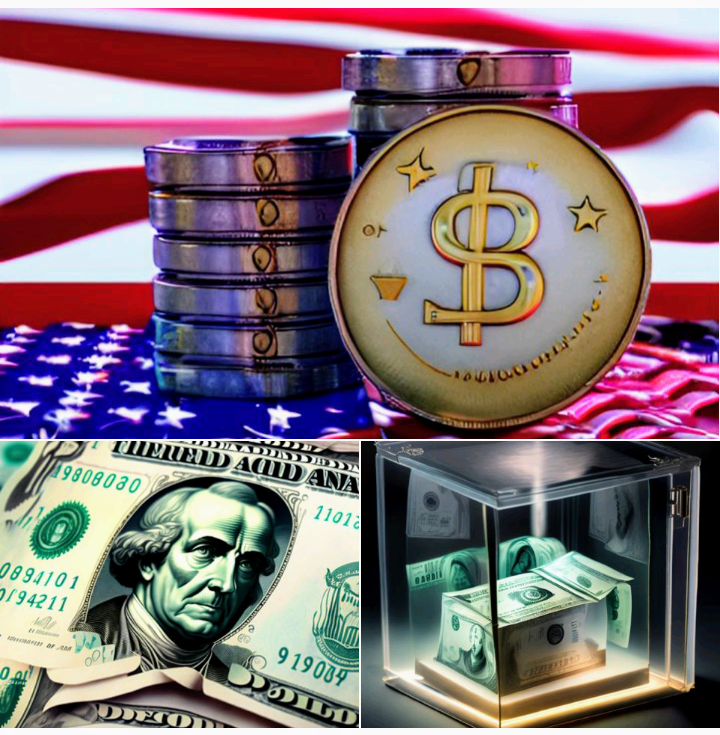
The US dollar has experienced a significant decline in value over the past few years. There are several reasons why this has occurred. One of the main factors contributing to the decline of the dollar is the large trade deficit that the United States has with other countries. The country imports more goods and services than it exports, which means that there is a constant outflow of dollars from the country. This has put downward pressure on the value of the dollar, as investors and traders have become increasingly concerned about the sustainability of the US trade deficit.
Another factor that has contributed to the decline of the US dollar is the large amount of debt that the country has accumulated. The US has a massive national debt, which has grown substantially over the past few decades.
Additionally, the US dollar has faced increasing competition from other currencies, particularly the euro and the Chinese yuan. The euro has become an increasingly popular currency for international transactions, as the European Union has become a major economic power. The Chinese yuan has also been gaining in popularity, as China has emerged as a major player in the global economy. As these currencies become more widely used, demand for US dollars has declined, which has contributed to the fall in the value of the currency.
Finally, the policies of the US government have also contributed to the decline of the US dollar. The country has pursued a policy of quantitative easing, which has led to an increase in the supply of dollars. This has put downward pressure on the value of the currency, as there are more dollars in circulation relative to other currencies. In addition, the government’s policies on taxation and regulation have also contributed to the decline of the dollar, as they have made it less attractive for investors and traders to hold US dollars.
Some analysts argue that the use of the dollar in this way has contributed to a loss of trust in the currency, as other countries may become concerned about the potential for the US to use the financial system as a weapon against them. This could potentially lead to a shift away from the US dollar as a reserve currency, as other countries seek to reduce their dependence on the US financial system.
However, it is important to note that the decline of the US dollar is a complex phenomenon that is influenced by a wide range of economic, political, and social factors. While the US government’s use of the dollar as a tool of foreign policy may have contributed to the decline of the currency in some ways, it is unlikely to be the sole or even the primary cause of the currency’s decline. Rather, the decline of the US dollar is likely to be the result of a complex interplay of factors that include global economic trends, geopolitical shifts, and domestic policies and practices.














 Student of Seton Hall University🎓 • UNA MEMBER • NGO
You must be logged in to post a comment.